By:
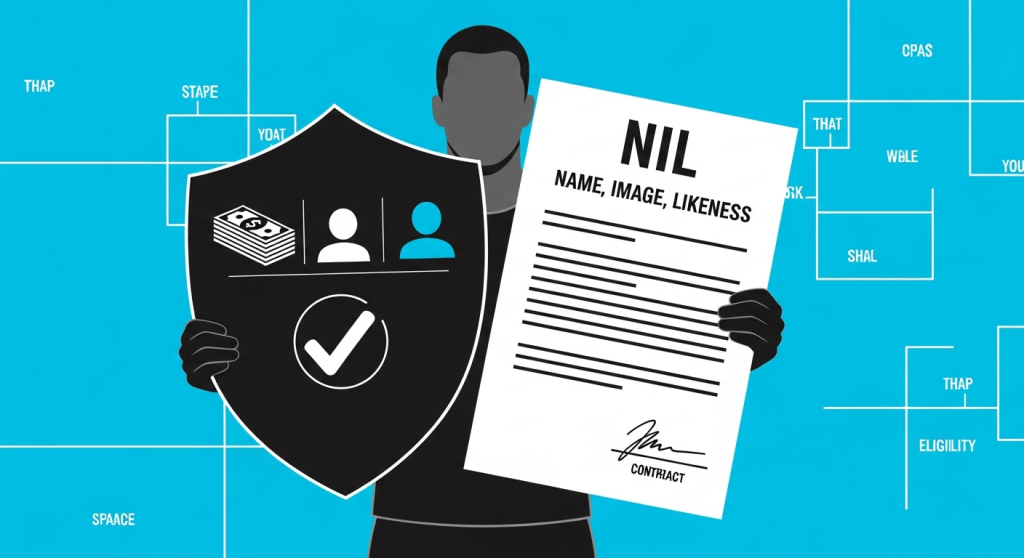
The era of “just being happy to be here” is over. In the current collegiate landscape, your Name, Image, and Likeness (NIL) are not just buzzwords – they are high-value business assets. Whether you are a five-star recruit signing a mid-six-figure deal with a collective or a walk-on landing a local gear endorsement, the document you sign today dictates your financial freedom for years to come.
Signing a bad contract can lead to lost eligibility, predatory tax liens, and the permanent loss of your intellectual property rights. This guide serves as your authoritative playbook for navigating the fine print. We have stripped away the legal jargon to give you the tactical intelligence required to protect your empire.
Table of Contents
- What is the first thing I should look for in an NIL contract?
- What are “Usage Rights,” and why do they matter for my future?
- How do I handle exclusivity clauses without killing future deals?
- What specific categories are “off-limits” under NCAA and state laws?
- How do I ensure I actually get paid the amount promised?
- What is a “Morals Clause,” and how can it be used against me?
- Can a brand own my social media handles or content forever?
- What are the tax implications of signing a major NIL deal?
- How do I terminate a contract if the relationship goes sour?
- Do I really need a lawyer, or can my parents/agent handle it?
1. What is the first thing I should look for in an NIL contract?
The first thing you must identify is the Scope of Work. Many athletes get blinded by the dollar amount at the top of the page and ignore the “Deliverables” section. You need to know exactly what is expected of you in exchange for that compensation.
Does the contract require four Instagram posts, or does it require you to be available for twelve in-person appearances? Does it include “content creation” where you are responsible for hiring a videographer, or does the brand provide the assets? If the scope is vague – using phrases like “reasonable promotional requests” – you are opening yourself up to being overworked without extra pay.
Pro Tip: Every deliverable must be tied to a specific timeline. “Ongoing social media support” is a trap. “One 30-second TikTok video per month for six months” is a professional standard.
2. What are “Usage Rights,” and why do they matter for my future?
Usage rights define how, where, and for how long a brand can use your face, name, and voice. This is where most athletes lose their long-term value.
Be wary of the term “In Perpetuity.” If you sign a contract that grants a brand the right to use your image “in perpetuity,” they own that specific content forever. You could be thirty years old, retired from the NFL, and still see your college-aged face on a billboard for a company you no longer support – and you won’t get paid another dime for it.
Tactical Move: Limit usage rights to the “Term” of the agreement plus a short “sell-off period” (usually 30-60 days). If they want to use your image for longer, they must pay a renewal fee.
3. How do I handle exclusivity clauses without killing future deals?
Exclusivity is a major value driver for brands, but it is a major risk for you. An exclusivity clause prevents you from working with a brand’s competitors.
The danger lies in how the “Category” is defined. If you sign an exclusive deal with a local “Beverage Company,” does that mean you can’t sign with Gatorade (Sports Drink), Celsius (Energy Drink), or even a local coffee shop?
The Strategy: Narrow the category as much as possible. Instead of “Athletic Apparel,” limit it to “Performance Compression Wear.” This leaves you free to sign a separate deal for footwear, lifestyle clothing, or headwear. Never agree to a “Global Exclusivity” clause unless the compensation is high enough to cover the loss of all other potential income in that space.
4. What specific categories are “off-limits” under NCAA and state laws?
Compliance is your shield. If your contract violates university policy or state law, you risk your eligibility and your spot on the roster. While the NCAA’s “Interim Policy” is broad, most states and individual University Athletic Departments have “Prohibited Categories.”
Commonly banned industries include:
- Gambling and Sports Betting
- Alcohol and Tobacco/Vaping products
- Adult Entertainment
- Cannabis and CBD (in most jurisdictions)
- Performance Enhancing Substances
Crucial Check: Always cross-reference your contract with your school’s “Conflict of Disclosure” policy. Most schools require you to upload your contract to a platform like INFLCR or Opendorse within a specific timeframe (often 3-7 days) for compliance review.
5. How do I ensure I actually get paid the amount promised?
A contract is just a piece of paper if it doesn’t outline a clear Payment Schedule. Avoid “Net-90” terms, which mean the brand doesn’t have to pay you until 90 days after you complete the work.
Demand a structured payout:
- Initial Payment: 25-50% upfront upon signing (signing bonus).
- Progress Payments: Linked to specific deliverables (e.g., $1,000 per post).
- Late Fees: Include a clause that triggers a 5-10% penalty if the brand misses a payment deadline.
Without a late fee or interest clause, the brand has no real incentive to pay you on time. You are a business; act like one.
6. What is a “Morals Clause,” and how can it be used against me?
A “Morals Clause” allows a brand to terminate the contract if you do something that brings “public disrepute, contempt, or scandal” to the company. While this sounds fair, these clauses are often written with extremely one-sided language.
As an athlete, you need to ensure the Morals Clause is Mutual. If the CEO of the brand gets caught in a massive fraud scandal, you should have the right to terminate the deal immediately to protect your brand. Additionally, the language should require a “conviction” or “material proof,” rather than just “public outcry” or “social media rumors.”
7. Can a brand own my social media handles or content forever?
No brand should ever have “Administrative Access” to your social media accounts. Some predatory contracts include language that requires you to hand over passwords for “optimization purposes.” This is a massive red flag.
Furthermore, clarify who owns the Work Product. If you film a high-quality video for a brand, do you have the right to post it in your personal portfolio after the deal ends? Ensure you retain the “Master Rights” to your own image, granting the brand only a “Limited License” to use that specific content for the duration of the deal.
8. What are the tax implications of signing a major NIL deal?
This is where student-athletes get crushed. In the eyes of the IRS, you are an Independent Contractor (1099-NEC), not an employee. This means the brand does not take taxes out of your check. You receive the full amount, but you owe a significant portion of it back to the government.
The 30% Rule: For every dollar you receive in NIL money, immediately move 30 cents into a separate high-yield savings account. That money belongs to the IRS.
Furthermore, “In-Kind” compensation – like a free truck, expensive watches, or free gear – may be taxable in certain settings.
9. How do I terminate a contract if the relationship goes sour?
You need an “Exit Strategy” in every agreement. This is known as the Termination Clause. Most brands will include a clause that allows them to fire you for almost any reason. You need “Termination for Convenience” rights as well.
If a better opportunity comes along, or if the brand’s reputation tanks, you want the ability to exit the deal with a 15-day or 30-day notice.
Watch for “Right of First Refusal”: This clause forces you to let the current brand match any offer you get from a competitor when the contract ends. This can “trap” you in a partnership and prevent you from moving to a bigger brand. Try to strike “Right of First Refusal” or “Right to Negotiate” clauses whenever possible.
10. Do I really need a lawyer, or can my parents/agent handle it?
An agent is a salesperson; a lawyer is a protector. While many sports agents are excellent at negotiating the number, they are not always trained to spot the legal traps buried in page 12 of a licensing agreement.
The Golden Rule: Never sign a document that has not been reviewed by an attorney who specializes in NIL or Intellectual Property law.
Many states have laws that require NIL agents to be registered and licensed. Ensure your team is vetted. If you are a high-net-worth athlete, you should also consider forming an LLC to sign these contracts. An LLC provides a layer of personal liability protection, ensuring that if a brand sues for a breach of contract, they are suing the company, not taking your personal savings or your car.
As a side-note: an LLC may not necessarily protect you in all circumstances either. If you injure someone in an accident and get sued, and your insurance does not cover all the claims – you may be personally liable for that person’s injuries, bills, or claims. This spills into the world of complex trusts and estate law to understand how you can start to separate your assets from liability as well.
These are the nuances that most student-athletes do not think about.
The Executive Summary for Athletes
The “Gold Rush” of NIL is transitioning into a “Business Maturity” phase. Brands are becoming more aggressive with their legal language, and the NCAA is tightening its oversight of “Fair Market Value.”
To win in this environment, you must treat every contract as a long-term business commitment. Don’t sign for the “clout” or the immediate check without calculating the long-term cost to your brand equity.
Before you sign, ask these three questions:
- How does this deal affect my ability to sign with a bigger brand next year?
- What is the exact “exit cost” if I want out of this deal in three months?
- Have I set aside the tax money for this specific payout?
If you cannot answer these with 100% certainty, put the pen down.
Be Prepared. Do Your Research. Consult A Profesisonal. Secure Your Legacy
For Student-Athletes: Do not navigate the legal minefield alone. Your personal brand is your most valuable asset during and after your playing days.
For University Leaders & Collectives: Institutional stability depends on the compliance of your athletes. Partner with our NIL Strategy Directors to implement robust educational frameworks and contract vetting processes that protect your program from NCAA inquiries and legal liability.
References & Citations
Sports Business Journal: The Evolution of NIL Contractual Language in Power 5 Athletics (2024 Editorial).
NCAA Interim NIL Policy: NCAA.org Official Guidance
Internal Revenue Service (IRS): Taxation of Self-Employed Individuals (1099-NEC)
Uniform Interim State Legislation: Summary of State NIL Laws (NIL Resource Center)
San Diego NIL Club Strategy: Best Practices in Collective Management
 become the business magazine™
Leave a comment