By: Sid Peddinti, Esq.
Nonprofit, Tax, and NIL Researcher, Publisher, and Lawyer.
TEDx Speaker. Advisor To Nonprofit Boards.
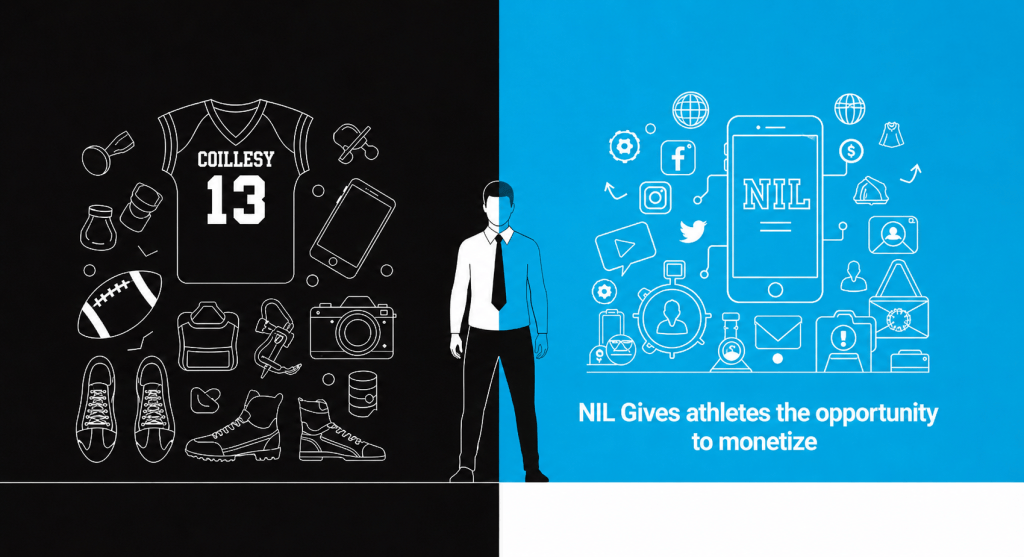
For nearly a century, the phrase “student-athlete” was tethered to a strict definition of amateurism that prohibited you from earning a single cent from your own identity. Those days are over. On July 1, 2021, the landscape of American sports shifted permanently.
Name, Image, and Likeness (NIL) isn’t just a legal loophole or a temporary trend; it is the commercialization of your personal influence. Whether you are a blue-chip recruit or a walk-on at a mid-major program, you now own the rights to your intellectual property. This transition has turned locker rooms into boardrooms. To succeed in this era, you must stop viewing yourself as just a player and start viewing yourself as a media entity and a startup founder.
Table of Contents
- What Exactly Does “Name, Image, and Likeness” Mean?
- Is NIL the Same as a Salary or Professional Contract?
- Who Is Eligible to Participate in NIL Activities?
- How Do Athletes Actually Make Money from NIL?
- What Is an NIL Collective and How Do They Work?
- What Are the Biggest Risks to Your NIL Success?
- Building a Personal Brand That Outlasts Your Playing Days
- References and Further Reading
What Exactly Does “Name, Image, and Likeness” Mean?
While “NIL” is thrown around constantly on ESPN and social media, few people actually break down the three distinct pillars of your legal rights. Understanding these is the first step to protecting your value.
Name
Your name is your primary identifier. In the NIL world, this extends beyond your jersey nameplate. It includes your nicknames, your social media handles, and even the way your name is stylized in a logo. When a company pays to put your name on a t-shirt or a digital advertisement, they are licensing this specific component.
Example: An athlete or an agency can use a moniker like “Black Mamba” for merchandise or branding, provided they legally own or license the rights and do not infringe on existing trademarks like those of the Kobe Bryant Estate.
Image
Your image refers to your visual representation. This includes photographs of you in action, video clips, and live appearances. It also covers your physical appearance in digital formats, such as being a playable character in a video game (like EA Sports College Football 25). If a brand uses a photo of you to sell a product, they are utilizing your “Image” rights.
Likeness
Likeness is the most nuanced of the three. It encompasses everything that makes you you without explicitly using your name or a literal photo. This includes your voice, your signature, your unique celebrations or catchphrases, and even your digital avatar. If a brand creates a cartoon character that mimics your specific throwing motion or your trademark hairstyle, they are profiting from your likeness.
Example: Cristiano Ronaldo’s signature celebration, widely recognized as the “Siuuu,” involves a rapid sprint followed by an explosive jump combined with a mid-air half-turn. He then lands firmly in a powerful stance, arms pulled back, while letting out a loud “Siuuu!” — an exclamation roughly translating to “Yes!” in Spanish and Portuguese.
Is NIL the Same as a Salary or Professional Contract?
This is the most common misconception in sports today.
NIL is not a salary.
When a professional athlete signs with the NFL or NBA, they receive a salary for their performance on the field. In the college space, “Pay-for-Play” remains strictly prohibited by NCAA rules. You cannot be paid a bonus for scoring a touchdown, and you cannot be paid a “salary” simply for being on the roster.
NIL is a quid pro quo (this for that) arrangement. To receive NIL compensation, you must perform a service. You are being paid for marketing and promotional activities. If you receive $1,000 from a local restaurant, you are not being paid to play football; you are being paid to post an Instagram story, sign autographs, or appear in a commercial for that restaurant. If you don’t do the work, you don’t get the money.
Who Is Eligible to Participate in NIL Activities?
The short answer: almost everyone. However, the rules vary drastically depending on your location and your level of play.
- College Athletes: Under current NCAA policy, all Division I, II, and III athletes can engage in NIL activities, provided they follow their specific school’s policies and state laws.
- High School Athletes: This is the Wild West. Some states (like California and Georgia) allow high schoolers to sign NIL deals without losing their eligibility. Other states maintain strict bans. If you are a high school athlete, you must consult your state’s high school athletic association before signing anything.
- International Athletes: If you are in the U.S. on an F-1 student visa, NIL is extremely complicated. Current federal visa regulations generally prohibit “off-campus employment,” which many NIL deals are classified as. International athletes should never sign a deal without consulting an immigration attorney.
How Do Athletes Actually Make Money from NIL?
The “NIL Gold Rush” isn’t just about massive national commercials. The revenue streams are diverse and often come from four primary categories:
- Social Media & Content Creation: This is the most accessible path. Brands pay you for “shoutouts,” sponsored posts, or long-form content on TikTok, Instagram, and YouTube. Your value here is determined by your engagement rate, not just your follower count.
- Local Endorsements: The “hometown hero” model. This involves partnerships with local car dealerships, restaurants, or apparel shops. These often involve “in-kind” deals (e.g., a free car lease in exchange for monthly social posts).
- Apparel and Merchandising: Group licensing allows you to get a cut of jersey sales, video game appearances, and trading cards. You can also launch your own direct-to-consumer brand or merchandise line.
- Camps and Clinics: You can leverage your expertise to host youth camps in your hometown. This is one of the most stable and high-margin NIL activities available to athletes in all sports.
What Is an NIL Collective and How Do They Work?
If you follow recruiting, you’ve heard the term “Collective.” An NIL Collective is an independent organization – usually started by prominent alumni and boosters – that is separate from the university but supports its athletes.
Collectives pool money from donors and businesses to create NIL opportunities for athletes at a specific school. They might pay you to work with a local charity or appear at a fan event.
While the university athletic department cannot legally run the collective, they often “identify” opportunities for their athletes through these hubs. For many top-tier recruits, the strength and budget of a school’s collective are now the deciding factors in their commitment.
What Are the Biggest Risks to Your NIL Success?
NIL is an incredible opportunity, but it is also a minefield for the unprepared.
- Tax Liability: NIL money is not “free.” You are considered an independent contractor (1099). If you receive $10,000 in NIL deals, you are responsible for paying taxes on that income. Failure to set aside 25-30% of your earnings for the IRS can lead to audits, tax debt, liens, and legal trouble. The IRS does not forgive your ignorance, even if you are a student. If you are receiving a benefit from the income (which you are), taxes are owed on every dollar earned. Keep in mind that some states also have a state income tax – which is separate from federal income tax – and that must be paid as well.
- Eligibility Violations: Every school has a compliance office. You are usually required to disclose your deals through platforms like Inflcr or Opendorse. If you fail to disclose a deal, or if a deal is found to be “pay-for-play,” you could be ruled ineligible. Voilation of these rules can have some serious repercussions, so it’s important to understand these rules to ensure you don’t disqualify yourself before kick-starting your professional career.
- Predatory Contracts: Agents and “marketing reps” are flooding the space. Never sign a contract that takes a massive percentage of your future earnings or grants a brand “perpetual rights” to your image. You must have every document reviewed by a qualified professional – ideally a lawyer who understands IP protection and contract law.
- We have also come across deals by marketing agencies and sports agents that lock-in athletes for 20-25 years. I know it seems “crazy”, but those are the predators out there who are preying on student-athletes that don’t know any better, and are excited to start making money.
Building a Personal Brand That Outlasts Your Playing Days
The average college athletic career is four years. The average professional career can be shorter in some cases. NIL shouldn’t be about chasing a few hundred dollars today; it should be about building a foundation for the next forty years.
Your brand is your reputation. If you are known for being late to appearances, posting controversial content, or being difficult to work with, your “market value” will plummet.
Conversely, if you use NIL to network with CEOs, learn the basics of contract law, stand out as a philanthropist or humanitarian, and build a loyal audience, you are essentially getting a four-year head start on your professional life.
Stop waiting for a brand to find you. Audit your social media presence, define your “niche” (what do you care about outside of sports?), and start treating your NIL like the business it is.
The Next Step
Are you maximizing your market value, or are you leaving money on the table?
Student-athletes: contact your school’s compliance officer and NIL department to ensure you are fully educated on local regulations.
University leaders and brand managers: the NIL landscape changes weekly. To stay ahead of the curve and protect your program’s future, team up with NIL researchers or attorneys to stay up-to-date and in compliance with the new changes.
References & Citations
Supreme Court of the United States: NCAA v. Alston (2021) Ruling on Student-Athlete Compensation.
NCAA NIL Policy: NCAA.org – Name, Image, and Likeness
San Diego NIL Club: Marketplace & Insights
NIL Resource Center: National Legislation and State Laws
Internal Revenue Service (IRS): Self-Employed Individuals Tax Center
 become the business magazine™
Leave a comment